The Sacred Geometry of Nordic Wilderness Shelters
Why contemporary Scandinavian hideaways embrace unadorned pine, turf roofs, and radical winter seclusion to reset our fractured attention.
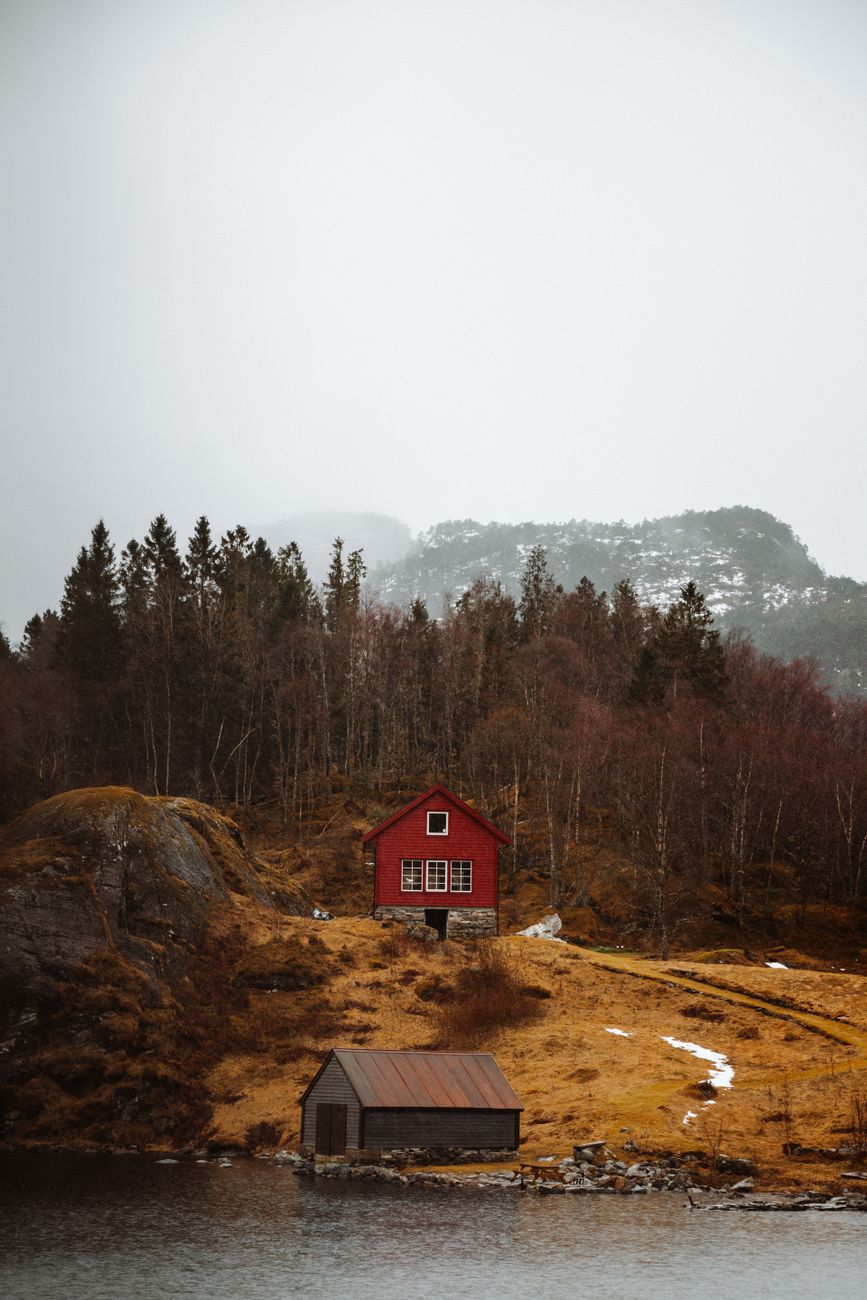
Table of Contents
When you stand inside a northern timber sanctuary during the first deep frost of November, the predominant sensory revelation is not cold, but silence. Not an artificial dead quiet, but a vast acoustic cushion composed of fallen pine needles, compacted moss, and centuries of undisturbed granite bedrock. In these quiet latitude pockets, architecture does not attempt to conquer the elements. It negotiates an honorable treaty.
For generations, the Scandinavian philosophy of friluftsliv—open-air living—treated cabins not as luxury commodities, but as vital stations of psychological recalibration. Built with hand-hewn logs, caulked with flax fiber, and warmed by a single soapstone woodstove, these outposts remind the modern traveler how minimal our true physiological needs truly are.
“A building in the wilderness should not shout. It should stand as quietly as a grandfather pine, absorbing snow until it dissolves back into its origin.”— Henrik Dahl, Architect & Forest Ranger
The Acoustic Value of Boreal Forests
Urban noise levels persistently disrupt cognitive focus, raising baseline cortisol without our conscious realization. In contrast, researchers studying the acoustic landscape of Norwegian sub-alpine zones found that ambient background volume frequently drops below 18 decibels. In this condition, the mind begins to hear the friction of falling snow against pine bark.
This absence of synthetic frequency creates a profound restorative state. When walking the unmarked paths leading from the Hardangervidda plateau, every step registers with granular clarity. The mind stops anticipating notifications and begins observing the gradient of twilight as it transitions from cobalt to deep ink.
Timber Vernacular vs. Synthetic Comfort
Modern luxury hospitality often introduces the very industrial mechanisms that travelers seek to flee: glass elevators, automated curtain tracks, and omnipresent screens. The authentic Nordic mountain shelter moves in the polar opposite direction:
- Local Heartwood: Spruce and Scots pine cut during winter dormancy to minimize sap shrinkage.
- Subtle Hearth Thermal Mass: Soapstone fireplaces that continue radiating warmth twelve hours after the last birch log embers.
- Off-Grid Gravity Cisterns: Fresh glacial melt piped purely by hydrostatic pressure, eliminating mechanical pumps.
Field Notes for Independent Trekking
Traveling responsibly in northern biomes requires strict adherence to seasonal limitations. Autumn weather transforms abruptly into blizzard conditions within twenty minutes. Always register your intended valley path with the nearest mountain association checkpoint, carry wool base layers rather than synthetic fleece, and maintain a paper navigational chart alongside battery-powered instruments.